

World Map with Oceans
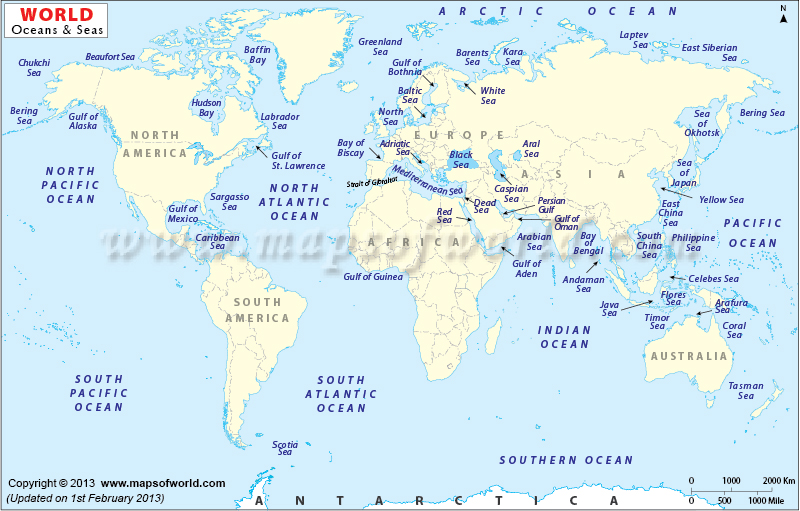
World Oceans Map is the world map with oceans, seas, and continents. How many oceans and seas are there in the world? Where are they situated? Know everything about the oceans of the world from these continents and oceans map. This map of oceans and seas helps you find out where the major 5 oceans (Pacific, Atlantic, Indian, Southern, and Arctic Oceans) are located. As there are no physical divisions to separate different oceans, they are collectively called the global ocean. 7 continents and 5 oceans map also show where North America, South America, Europe, Asia, Africa, and Australia are located with respect to different oceans.
 Buy Printed Map
 Buy Digital Map
 Customize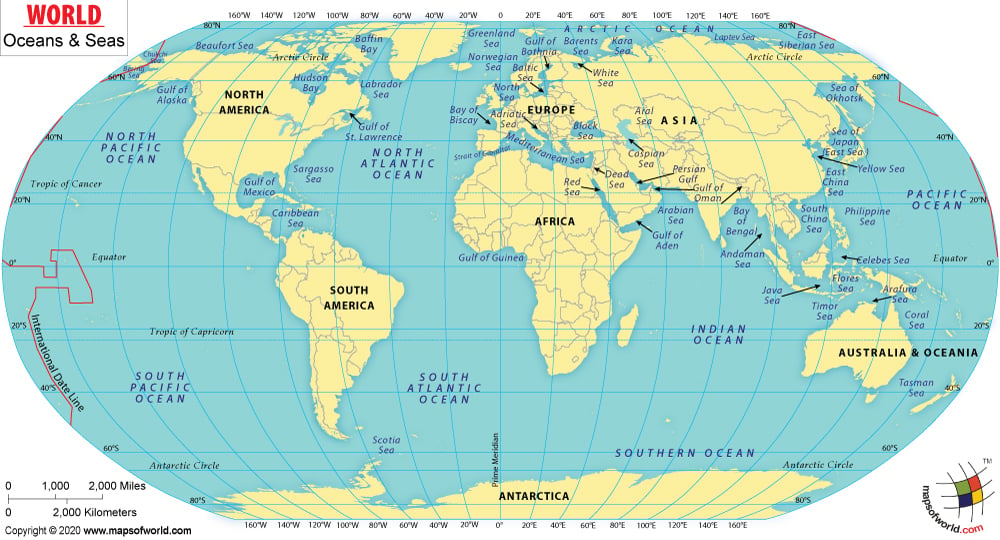
| Disclaimer |
World Ocean Map 2013
-
World Ocean Floor Map
$24.65
-
World Ocean Floor Map
$20.75
-
World Physical Map
$16.95
×
Disclaimer : All efforts have been made to make this image accurate. However MapSherpa, Inc, its directors and employees do not own any responsibility for the correctness or authenticity of the same.
More Ocean Maps

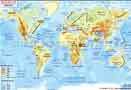
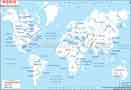
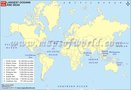


The World Oceans Map is a world map with Oceans labeled, providing you a detailed view of the list of oceans in the world. This is a large world map in Robinson Projection that not only helps you find out the 5 major oceans but also the 7 continents and all seas including:
- Black Sea
- Arabian Sea
- South China Sea
- Sea of Japan (East Sea)
- Bay of Bengal
- Hudson Bay
- Gulf of Alaska
- Yellow Sea
- East Siberian Sea
- Scotia Sea
- The Tasman Sea, and many more.
- Laptev
- Kara
- Chukchi
- Beaufort
- Barents
- Norwegian
- Greenland
- Wandel
- Lincoln
- East Siberian, and others
The youngest sea in the world is the Baltic Sea in Scandinavia. It was formed 10,000 and 15,000 years back due to the erosion of glaciers. It has a unique mix of saltwater and freshwater. That’s what makes the Baltic Sea the largest brackish water body on earth. This is the reason you’ll find a wide array of freshwater and saltwater plants and animals in the Baltic Sea.
A sea can also be completely landlocked. The most famous example of such a sea is the Caspian Sea, which is located between Russia and Iran. As it is completely landlocked, the Caspian Sea is also known as the largest lake in the world. There are other instances of landlocked seas in the world and they are the Dead Sea and the Aral Sea.
The seas on earth have a wide range of sizes, locations, and temperatures. Therefore, marine ecosystems also vary to a large extent due to these varying factors.
The warmth of a sea also varies but most of them remain very warm during most of the year. The average temperature of the Red Sea is around 30 degrees Celsius (86 degrees Fahrenheit). The Red Sea is also the saltiest sea because it contains 41 parts of salt per 1,000 parts of seawater.
<
However, not all seas have warm water. The location of the sea has a profound effect on the sea temperature. For instance, the surface water temperature of the Greenland Sea hovers near the freezing mark during most of the year.
Whether you are looking for a blank, outline, printable, high resolution, or customized world map with oceans, seas, continent names, latitude & longitude, equator, tropic of cancer, and other imaginary geographical lines, you’ll find everything of your choice at MapOfWorld.com.
However, not all seas have warm water. The location of the sea has a profound effect on the sea temperature. For instance, the surface water temperature of the Greenland Sea hovers near the freezing mark during most of the year.
Whether you are looking for a blank, outline, printable, high resolution, or customized world map with oceans, seas, continent names, latitude & longitude, equator, tropic of cancer, and other imaginary geographical lines, you’ll find everything of your choice at MapOfWorld.com.