UK Map
 Buy Printed Map
 Buy Digital Map
 Wall Maps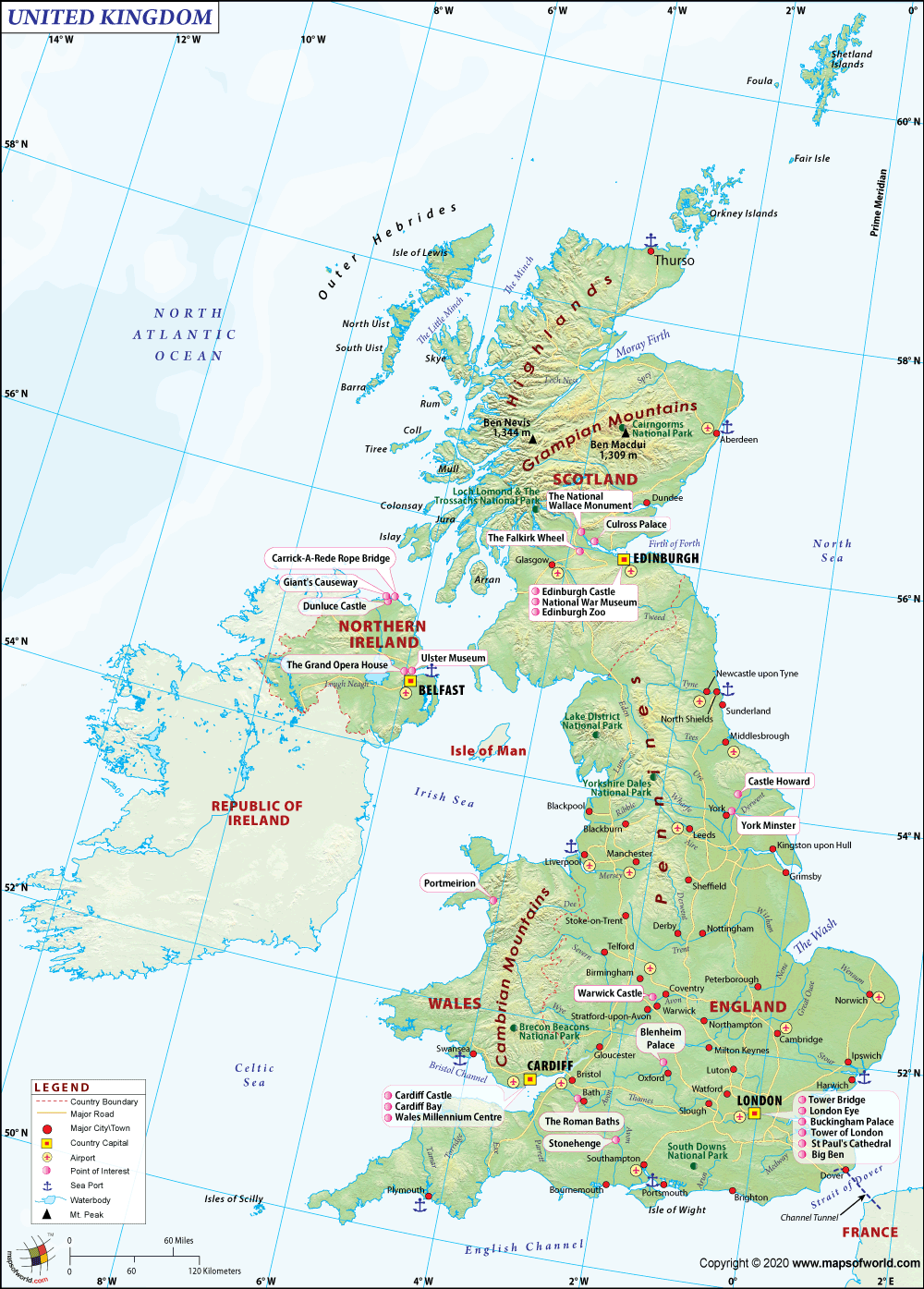
- Neighboring Countries - Isle of Man, Ireland, Netherlands, Belgium, France
- Continent And Regions - Europe Map
- Other United Kingdom Maps - Where is UK, UK Blank Map, UK Road Map, UK Rail Map, UK River Map, UK Cities Map, UK Political Map, UK Physical Map, UK Flag
This map of the UK or United Kingdom shows the relief pattern, political boundaries, and important features of the country, such as mountain ranges, mountain peaks, rivers, and lakes. An ideal guide for travelers, this United Kingdom Map shows major roads, airports, seaports, and cities. The United Kingdom Map also shows information about the major attractions in the UK, such as Buckingham Palace, London Eye, Grand Opera House, Wallace Monument, National Museum, and many more. This United Kingdom Map is a rich source of information and is useful for educational, tourism, business, and reference purposes. This interactive map of the United Kingdom enables users to get precise details by clicking on any map region.
United Kingdom
The United Kingdom is located in western Europe as seen on the United Kingdom Map. The United Kingdom comprises four countries – Scotland, Northern Ireland, Wales and England as shown in the map of United Kingdom. Scotland, which is located in the northern part of the United Kingdom, shares its borders with England as represented in the map of United Kingdom. Edinburgh is the capital of Scotland, while Glasgow is its largest city also shown in the United Kingdom Map. Scotland covers an area of 30,090 square miles.
England shares its borders with Scotland and Wales as represented in the map of United Kingdom. England, which comprises around 84 percent of the population of the United Kingdom, covers five-eights of the island of Great Britain. Its capital and the largest city, London is also the capital of the United Kingdom and can be seen in the map of United Kingdom . The largest of the four countries, England covers an area of 50,301 square miles.
Wales shares its land border with England and covers an area of 8,023 square miles. Cardiff is its capital as well as the largest city as represented in the map of United Kingdom. Northern Ireland, which comprises 3 percent of the population of the United Kingdom, shares its land border with the Republic of Ireland also shown on the United Kingdom Map. Northern Ireland covers an area of 5,460 square miles and Belfast is its capital as well as the largest city as seen in the Map of United Kingdom.
About United Kingdom
History of United Kingdom
It is said that the island we know as the United Kingdom (UK), today came into existence around 6,500 BC, when it was separated from the rest of Europe by the formation of the English Channel.
In the Roman Britain period, from 43 to 1065 AD, Roman rule covered much of England and Wales.
In the Anglo-Norman period and the Middle Ages, from 1066 to 1347, Duke William of Normandy, known as William the Conqueror, defeated King Harold of England and ruled over England and Scotland. In 1215 the Magna Carta (a royal charter of political rights) was signed and is considered to be the foundation of the parliamentary system of government.
In the Late Medieval period, from 1348 to 1484, the bubonic plague, also called the Black Death, spread through England, Wales, and Scotland and killed almost one-third of the entire population.
In the period of the Tudors from 1485 to 1713, Henry Tudor, also known as Henry VIII, defeated Richard III, and assumed sovereignty of England, and in 1534 he became the head of the Church of England after separating the English Church from Rome. In 1588 the colonization of territories by Britain began with the Virginia colonies. In 1603 Queen Elizabeth I, also known as the Virgin Queen, died without leaving a successor, and then the son of Mary, Queen of Scots, who was King James VI of Scotland, succeeded as James I, King of England – The first King of Great Britain.
In the period of the Georgians, from 1714 to 1836, during the reign of King George I, a role similar to that of the present day prime minister was assumed by Sir Robert Walpole. In 1801, by an act of the Union, Ireland was brought into the UK and the country became the United Kingdom of Great Britain and Ireland.
In the Victorian period from 1837 to 1900, Queen Victoria, the second longest-reigning British monarch introduced a number of constitutional changes. The People’s Charter was based on these changes and though it was rejected many times in the Parliament, eventually five out of the original six demands in the Charter became part of the Constitution of Britain. This was also the period of the Industrial Revolution which led to the domination of Britain over a large part of the world.
The early 20th Century from 1901 to 1945, saw the start and end of the two world wars which took their toll on the economy of the UK. In 1936, Edward VIII abdicated as king in order to marry Mrs. Wallis Simpson, as the Church of England would not permit him to marry a divorcee. His younger brother came to the throne as King George VI.
The Post World War II period started in 1946 and continues into the 21st century. In 1952, Queen Elizabeth II ascended the throne after the death of her father King George VI. In September 2015, she became the longest reigning British Monarch. The economy was nationalized when the Labour Party came to power after World War II. When the Conservative government was in power during the years of Margaret Thatcher, the national industries were privatized. These were also the years in which Britain let go of most of its colonies and dismantled the ’empire,’ which at its peak had covered nearly one-fourth of the world at that time.
Geography of United Kingdom
Physical Geography
Location
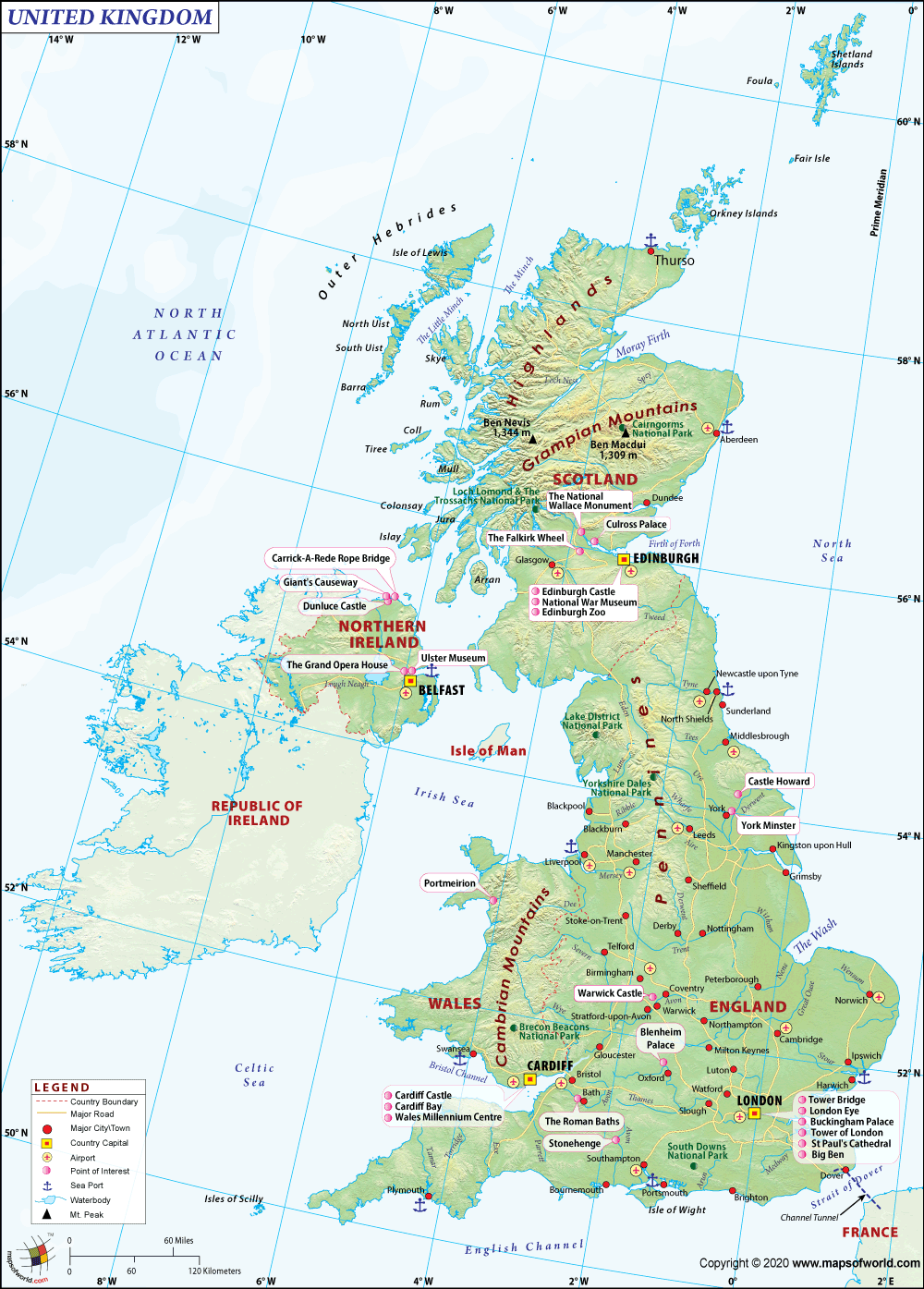 The United Kingdom of Great Britain and Northern Ireland, or the United Kingdom (UK) is part of the European continent as seen in the map of United Kingdom. It is bound in the North and West by the North Atlantic Ocean, in the South by the English Channel and in the East by the North Sea as represented in the United Kingdom Map. It is linked to France, which is only 22 miles (35 km) across the English Channel by a tunnel under the sea, and shares an international boundary with Ireland. Both are shown on the map of United Kingdom.
The geographic coordinates of the country are 54 degrees 00 minutes north and 2 degrees 00 minutes west. The northernmost point of the country is Out Stack on Shetland Island, while the southernmost point is Western Rocks on the Isles of Scilly, and the easternmost point is Lowestoft Ness in Suffolk, while the westernmost point is Soay on the archipelago of St. Kilda. The entire mainland part of the country lies between the 49 degrees north and 59 degrees north latitude, and 8 degrees west to 2 degrees east longitudes.
The prime meridian which is also called the Greenwich Meridian, or the International Meridian, passes through the UK. The standard time zone in the country thus has no offset from the Coordinated Universal Time (UTC). The entire country follows one time zone in the winter, the WET-Western European Time (UTC +0).
However in summer, daylight saving time sets the clock forward by 1 hour, and the time zone is then called BST – British Summer Time (UTC +1). This time zone is the same as WEST – Western European Summer Time (UTC +1). In the UK daylight saving time begins on the last Sunday of March, and ends on the last Sunday in October each year. Note, this clock forwarding does not apply to the overseas or dependent territories of the UK.
Physiography
The total area of the UK is 93,627.8 sq mi (243,610 sq km), of which the land area is 93,638 sq mi (241,930 sq km), while the remaining is covered by water, as represented in the United Kingdom Map.
The UK is an island nation made up of a single large island, and numerous smaller islands as shown in the map of United Kingdom. The entire coastline is heavily indented. The main island is covered with rugged hills and low mountains, especially in the west. Parts of northwest England, Wales, and Scotland are also quite mountainous. As you leave the northwest, level rolling plains are found in the east and southeast. Living up to its island status, no location in the country is more than 78 mi (125 km) from tidal waters.
The highest point in the country is Ben Nevis which is 4,406 ft (1,343 m) high while the lowest point is The Fens which lies at -13 ft (-4 m).
UK Climate
The largely temperate climate of the UK has a maritime influence due to it being an island nation. The Gulf Stream, which is a warm ocean current from the Atlantic Ocean, helps to make winters relatively mild for the UK despite its latitude.
The main influences on temperature in the country are latitude and altitude. With an increase in either of the two, the mean temperature decreases. The warmest place in the UK is London which is represented on the map of United Kingdom, with temperatures ranging from 41 degrees F (5 degrees centigrade) in January to 64.4 degrees F (18 degrees centigrade) in July; with an annual mean of 52 degrees F (11 degrees centigrade).English weather and its unpredictability are quite well known. This comes from the fact that the weather in the UK is quite erratic, and cloud & rain occur frequently throughout the year. But since the heaviest rainfall comes from frontal systems, autumn and winter are the wettest seasons. In the summer, the rainfall comes mostly from convective activity. The wettest places in the UK with an average rainfall of over 118 inches (3,000 mm) are in western Scotland, northwest England, and north Wales.
In general terms four seasons can be distinguished in the UK. They are Spring (March to May), Summer (June to August), Autumn (September to November) and Winter (December to February).
Rivers
The United Kingdom Map highlights rivers in the UK are not very long since the country is an island. Important east-flowing rivers that flow into the North Sea are the Thames, Great Ouse, Trent, Ouse, Tyne and Tweed, with the Severn and the Wye rivers flowing westwards into the Atlantic Ocean. Technically the longest river in the UK is the Severn, while the deepest is the Thames, and is navigable as far inland as London. The rivers are marked on the map of United Kingdom.
Biodiversity
Despite its relatively small size, the UK is home to a number of different habitats, which include coastal habitats like sand dunes and salt marshes; lowland grassland and lowland heathland habitats; freshwater and lowland habitats like rivers, lakes, fens, and raised bogs, upland habitats like blanket bog, limestone pavements, and woodland habitats like mixed deciduous, native pinewood, and wood pastures. These habitats are home to thousands of species of flora and fauna.
Iconic flora of the UK is oak, elm, ash, beech, pine, and birch trees. The iconic fauna is; fox, deer, hare, hedgehog, rabbit, weasel, stoat, shrew, rat, and mice. Larger animals like wolf, bear, boar, and reindeer, have become extinct from the country. Among the declining bird species, the pheasant, partridge, and red grouse are protected as game birds even today.
National Parks
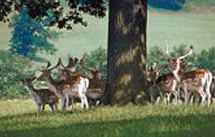 There are 15 National Parks in the UK, 10 are in England, three in Wales, and two in Scotland. The National Parks in England see a great many visitors each year.
The popular National Parks are; the Yorkshire Dales, the Lake District, the North York Moors, the South Downs, Dartmoor, Northumberland, the Broads, the New Forest, the Peak District, and Exmoor. The Welsh National Parks are; The Brecon Beacons, the Pembrokeshire Coast, and Snowdonia. The two National Parks in Scotland are, the Cairngorms National Park and Loch Lomond & the Trossachs National Park.
Culture of United Kingdom
Food
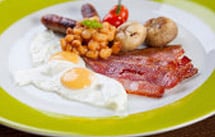 Traditional food in the UK has been facing competition from recipes brought into the country from around the world, to the extent that today it is said that curry is the most popular dish in England. Most of the traditional dishes in the UK are based on meat, fish, potatoes, butter, and eggs.
An interesting fact about meal times in the UK is that the three meals of the day were traditionally called breakfast, eaten in the morning; dinner, which was the main meal in the afternoon; and tea, which was the evening meal. Today they are referred to as breakfast, lunch, and supper.
Music
 In the early 1960’s, the Beatles arrived on the UK music scene, and since then Pop music has been an integral part of British culture. Given the multicultural composition of the UK today, there are several other genres of music that are popular in the country. In alphabetical order they include Bhangra, BritPop, Garage, Glam Rock, Goth, Grunge, Hip Hop, Indie, Madchester, Mods, Northern Soul, Progressive Rock, Punk, Rockers, Ska, Soca, and Techno.
The UK is home to some of the biggest legends of the music world, including: Sir Paul McCartney, Sir Cliff Richard, Sir Eric Clapton, David Bowie, Sir Elton John, and Pete Townsend. Many world-renowned bands hail from the UK, including The Beatles, Queen, The Rolling Stones, The Smiths, Pink Floyd, Radiohead, The Who, The Clash, and the genre-defining,Led Zeppelin.
Art and Painting
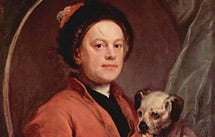 Art in the UK has been greatly impacted by European traditions, and a classification of British art separate from the European styles is extremely difficult. Thus, the art movements of Europe which have also had an influence on British art are Medieval and Gothic Art, Renaissance, Baroque, Rococo, Neo-Classical, Romanticism, Realism, Impressionism, Post-Impressionism, Symbolism, Art Nouveau, Fauvism, Cubism, Dadaism, Bauhaus, Surrealism, Abstract Expressionism, Minimalism and Post-Modernism which is continuing till today.
However three British art movements which began in the UK are: the Pre-Raphaelite Brotherhood (1848-1854), the Arts and Crafts Movement (1861-1914), and Pop Art (1955-1985).
Some of the most renowned British painters are: William Hogarth (1697-1764), Sir Joshua Reynolds (1723-1792), George Stubbs (1724-1806), Thomas Gainsborough (1727-1788), Joseph Wright of Derby (1734-1797), Sir Henry Raeburn (1756-1823), John Constable (1776-1837), J.W.M. Turner (1775-1851), John Sell Cotman (1782-1842), Samuel Palmer (1805-1881), Sir Stanley Spencer (1891-1959), Richard Hamilton (1922-2011) and David Hockney (1937- ).
Sculpture
Some of oldest sculptures found in the UK are the massive stone crosses believed to have been carved between 500 and 1000 AD. Stone, marble, bronze, wood, ceramic, and metal are among the diverse media that have been commonly used for sculpting in the UK.
Some of the finest British sculptors are Nicholas Stone (1586-1647), John Bushnell (1630-1701), Grinling Gibbons (1648-1721), Joseph Wilton (1722-1803), Joseph Nollekens (1737-1823), John Bacon (1740-1799), John Flaxman (1755-1826),Sir Richard Westmacott (1775-1856), Matthew Cotes Wyatt (1777-1862), Sir Francis Legatt Chantrey (1781-1841), John Gibson (1790-1866), Samuel Joseph (1791-1850), Alfred Stevens (1817-1875), George Frederick Watts (1817-1904), Alexander Munro (1825-1871), Jacob Epstein (1880-1959), Henry Moore (1898-1986), Barbara Hepworth (1903-1975), Sir Anthony Caro (1924-2013 ), Antony Gormley (1950- ) and Anish Kapoor (1954- ).
Design and Architecture
Like many aspects of its culture, British architecture has been influenced by the nation’s long and diverse history. Broadly the architectural styles in the UK correspond to its historical periods, and are classified as Pre-Roman, of which Stonehenge is the most famous example and can be located on the map of United Kingdom; Roman, of which the Hadrian’s wall is an example; Anglo-Saxon, characterized by high and narrow structures; Norman, characterized by rounded arches; Gothic, which was influenced by France; Vernacular, which was constructed in wood; Tudor, in which the focus shifted from defense to entertainment structures; Stuart, which was influenced by the Palladian style of Italy; Georgian, which was influenced by the European Palladianism; Victorian, in which steel was introduced; 20th Century, characterized by non-symmetrical designs; Modernism, in which reinforced concrete frames were introduced; High-Tech, which was used for commercial buildings; Post Modern, which led the construction boom of the shopping malls and office complexes; and current, which focuses on building sustainable structures.
Some of the well-known British architects are Inigo Jones (1573-1652), Christopher Wren (1632-1723), Nicholas Hawksmoor (1661-1736), Thomas Archer (1668-1743), Colen Campbell (1676-1729), William Kent (1685-1748), Lancelot ‘Capability’ Brown (1716-1783), Robert Adam (1728-1792), James Wyatt (1746-1813), Humphrey Repton (1752-1818), Charles Barry (1795-1860), Sir George Gilbert Scott (1811-1878), A.W. Pugin (1812-1852), William Butterfield (1814-1900), G.E. Street (1824-1881), Sir Richard Rogers (1933- ), Sir Norman Foster (1935- ), Sir Terry Farrel (1938- ), Will Alsop (1947- ), Zaha Hadid (1950-2016 ), Eric Parry (1952- ), David Chipperfield (1953- ) and Sunand Prasad (1962- ).
Literature
In the UK, the eras of literature can be classified into Gothic, Medieval, Renaissance, Restoration, Romantic, Victorian, and the Modern period.
It is contended that some of the world’s greatest writers and poets have come from the UK. This claim is difficult to refute with names like: Geoffrey Chaucer (1342/43-1400), William Shakespeare (1564-1616), John Milton (1608-1674), Daniel Defoe (1660-1731), William Wordsworth (1770-1850), Sir Walter Scott (1771-1832), Samuel Taylor Coleridge (1772-1834), Jane Austen (1775-1817), Lord Byron (1788-1824), Percy Bysshe Shelley (1792-1822), John Keats (1795-1821), Charles Dickens (1812-1870), Charlotte Bronte (1816-1855), Thomas Hardy (1840-1928), Robert Louis Stevenson (1850-1895), H.G. Wells (1866-1946), William Somerset Maugham (1874-1965), E.M. Forster (1879-1970), Sir P.G. Wodehouse (1881-1975), Virginia Woolf (1882-1941), D.H. Lawrence (1885-1930), Aldous Huxley (1894-1963), George Orwell (1903-1950), Graham Greene (1904-1991) and Dylan Thomas (1914-1953).
And added to the list are Nobel Prize winners in Literature from the UK: Rudyard Kipling (1865-1936), John Galsworthy (1867-1933), T.S. Eliot (1888-1965), Bertrand Russell (1872-1970), Sir Winston Churchill (1874-1965), Patrick White (1912-1990), Elias Canetti (1905-1994), Sir William Golding (1911-1993), Sir V.S. Naipaul (1932- ), Harold Pinter (1930-2008), and Doris Lessing (1919-2013).
Fashion
From the spangled silk gowns of the days of yore, to the style of the swinging sixties and Punk style, the fashion scene in the UK has seen it all. Some of the most famous fashion designers and brands from the UK are Vivienne Westwood, Zandra Rhodes, Paul Smith, Alexander McQueen, Stella McCartney, Burberry, Christopher Kane, Mary Quant, Matthew Williamson, Katharine Hamnett, Jonathan Saunders, and Paul Smith.
While some well-known fashion boutiques for women in the UK are: A La Mode, Bernard, Celestine Eleven, Feathers, Genevieve, Mechant Archive, Mooi, Rewind Vintage Affairs, The Gathering Goddess, and Twentyone St. Johns Wood, all in London; Changing Room, in Tunbridge Wells; and Please Don’t Tell, in Belfast. Two boutiques which cater to men are Shefton Men in London, and Zoo in Ilford.
Some of the famous boutiques for both men and women’s fashion are: the Box Boutique, Browns, B Store, Diverse, Hostem, House of Liza, Labour of Love, Larizia, Layers, Old Curiosity Shop, Press, Primitive London Ltd, Start, The Library, The Old Shoreditch Station, Ursa Loves all in London; Autograp in Birmingham; Pollyanna in Barnsley; Seasons in Sheffield; Giulio in Cambridge, and The Editeur in Chester.
Cinema
 Due to the influence of its history and the rich tradition of literature, cinema in the UK has favored some genres over others. Broadly, the British films can be classified into Action, Adventure, Drama, Animation, Biopic, Documentary, Fantasy, Romance, Comedy (including romantic comedy), Family, Crime, Horror, Science, Thriller and Musical.
One of the iconic characters of British cinema is the world’s most well known MI6 spy, Secret Agent, James Bond, code named ‘007’.
Other famous film actors from the UK are: Sir Lawrence Olivier, Anthony Jeremy Brett, Sir Kenneth Branagh, Roger Moore, Dame Judy Dench, Dame Maggie Smith, Vanessa Redgrave, Jeremy Irons, Micheal Caine, Emma Thomson, Kate Winslet, Emma Watson, Rowan Atkinson, Stephen Fry, Hugh Laurie, Hugh Grant, Daniel Craig, Daniel Radcliffe and Benedict Cumberbatch. Sir Sean Connery is a well-known Scottish actor. Two well-known Welsh actors are Sir Anthony Hopkins and Katherine Zeta-Jones.
Some famous British film directors are: Alfred Hitchcock, Charlie Chaplin, Richard Attenborough, David Lean, Ridley Scott, Danny Boyle, Mike Leigh, and Ken Russell.
Sports
 Sports are very popular in the UK. Some of the most popular sports are; football (soccer), rugby, cricket, tennis, squash, golf, horse racing, motor sports, darts, boxing, athletics, and chess.
Some of the UK’s best-known sporting icons are: Sir David Beckham and Sir Bobby Charlton (football), Sir Stephen Redgrave (rowing), Lester Piggott (horse racing), Ian Botham (cricket), Sir Sebastian Coe and Paula Radcliffe (middle-distance and long-distance running), Lennox Lewis (boxing), Daley Thomson (decathlon), Mo Farrah (middle-distance running), Nick Faldo (golf), Jayne Torvill and Christopher Dean (ice-skating), and Fred Perry and Andy Murray (tennis).
Famous Brits
10 Britons who are considered most influential by the British public are: Sir Winston Churchill, a politician, soldier, artist and former Prime Minister; Isambard Kingdom Brunel, an extraordinary Victorian engineer; Princess Diana of Wales; Charles Darwin, a naturalist; William Shakespeare, a playwright and poet; Sir Isaac Newton, a mathematician and scientist; Queen Elizabeth I who reigned over England from 1558-1603; John Lennon, a musician and composer; Horatio Nelson, a British naval hero; and Oliver Cromwell, a military, political, and religious figure.
Motorways
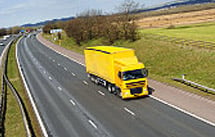 With about 397,039 km (245,709 miles) of roads, the UK had the 20th-largest road network in the world in 2017. The country has a system of trunk roads which are maintained by the highway authority, and non-trunk roads which are maintained by the local authorities. Based on their grading, the roads are classified into three categories; motorways, A-roads, and B-roads.
UK Road Map…
Railways
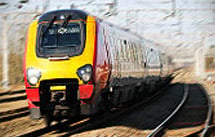 The UK is ranked 18th in the world, with its 16,320 km ( 10,141 miles) of railway tracks. The main railway stations in the country are; Paddington Station, Waterloo Station, London Bridge Station, King’s Cross Station, Liverpool Street Station, Victoria Station, Euston Station, and Charing Cross Station in London; Glasgow Central Station in Glasgow; Birmingham New Street, in Birmingham, and Leeds City Station, in Leeds.
UK Rail Map…
Airways
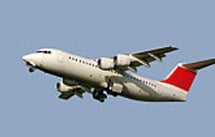 With 460 airports, as per the year 2013 data, and 28 registered air carriers, the UK is ranked at number 18 in the world. Twenty four of the airports are international commercial airports, and based on the volume of passengers, the largest are; London Heathrow, London; London Gatwick, London; Manchester, Manchester; London Stansted, London; London Luton, Luton, Bedfordshire; Edinburgh, Edinburgh; Birmingham International, Birmingham; Glasgow International, Glasgow; Bristol International, Bristol and Liverpool John Lennon, Liverpool.
Waterways
As an island nation, the UK has about 7,723 miles (12,429 km) of coastline, and over 1,988 miles (3,200 km) of waterways. However, only about 385 miles (620 km) of the waterways in the country are used for commercial activities. Some of the country’s well-known ports are; Dover, Felixstowe, Immingham, Liverpool, London, Southampton, and Teesport in England; Milford Haven in Wales, and Forth Ports in Scotland.
The UK has several oil terminals, including; Fawley Marine terminal, and Liverpool Bay terminal in England, Braefoot Bay terminal, Finnart oil terminal, and Hound Point terminal in Scotland.
Satellites
By March 2019, the United Kingdom had 60 operating satellites (as per the UCS Satellite Database).
Telephone/ Mobile network
 The international country code for the UK is 44. There were 33.14 million telephone lines in use, and 79.10 million mobile cellular connections in the country according to 2017 International Telecommunications Union (ITU) data.
Internet
The internet country code for the UK is ‘.uk,’ and as per 2017 data, 26.01 million people used the fixed line broadband internet connection in the country.
Settlements
In the UK there are no specific criteria to define a city, and even today city status is granted by the British Monarch. Thus, many cities included in the official list of 66 UK cities would be considered ‘towns or villages,’ by the rest of the world. For example, St. David’s, in Wales, with a population of just 2,000, is the smallest city in the UK.
By global standards, some of the largest cities in the UK are; London, Birmingham, Manchester, West Yorkshire, Bristol, Liverpool/ Merseyside, Leicester, Edinburgh, and Glasgow. These cities can be located on the map of United Kingdom.
Interestingly, not classified as cities in the UK are: Reading, Berkshire, Dudley, West Midlands, Northampton, East Midlands, Luton, Bedfordshire, Milton Keynes, Buckinghamshire, Bournemouth, Dorset, Southend-on-Sea, Essex, Swindon, Wiltshire, Huddersfield, West Yorkshire, Poole, Dorset, Middlesbrough, and North Yorkshire, yet nearly anywhere else in the world they would be considered cities.
United Kingdom Facts
| Official Name | United Kingdom of Great Britain and Northern Ireland |
| Continent | Europe |
| Lat Long | 51.5000 N, 0.1167 W |
| Area | 242,495 km2 (93, 628 sq mi )Water (%) 1.34 |
| Population | 65648100 |
| Capital | London |
| Largest City | London |
| Official Languages | English, Irish, Scottish, Welsh, Cornish, Ulster Scots |
| Major Religion | Christianity, Islam, Sikhism, Hinduismism Christian (includes Anglican, Roman Catholic, Presbyterian, Methodist) 59.5%, Muslim 4.4%, Hindu 1.3%, other 2%, unspecified 7.2%, none 25.7% (2011 est.) |
| National Day | 12. April 1927 |
| Form of Government | Unitary parliamentary constitutional monarchy |
| President | NA |
| Vice President | NA |
| Prime Minister | Boris Johnson since 2019 |
| Currency | Pound Sterling (GBP) |
| GDP | $2.569 trillion (2014 est.) |
| Calling Code | 44 |
| Time Zone | GMT (UTC) Summer (DST) BST (UTC+1) |
| Internet TLD | .uk |
What is the Official name of UK
The official name of UK is
United Kingdom of Great Britain and Northern Ireland.
Where is United Kingdom?
The United Kingdom of Great Britain and Northern Ireland is a country located off the north-western coast of continental Europe. The country consists of the island of Great Britain, the north-eastern part of the island of Ireland and many other smaller islands as shown in the map of United Kingdom.
What is the capital of United Kingdom?
London is the capital city of the United Kingdom. Covering an area of 607 square miles, it is the largest metropolitan area in the United Kingdom. It is located on the River Thames.
London is the largest financial center in the world, almost on par with New York. It has the fifth-largest GDP in compared to the other wealthy cities in the world. Fashion, cuisine, tourist places, and art and architecture of the city attract a million visitors; it is the most-visited city in the world. The Tower of London, Kew Gardens, Palace of Westminster, St Margaret’s Church, Buckingham Palace, Piccadilly Circus, and Trafalgar Square are the major attractions. Some of these places are shown on the map of United Kingdom.
How big is United Kingdom?
The United Kingdom covers a total area of 94,060 square miles. The country has a coastline of 11,073 miles. As per census in 2011, the country had a population of 63.18 million.
What are the ethnic groups in United Kingdom?
The majority of the population of the United Kingdom is composed of whites. The minority ethnic groups in the country include South Asians, Blacks, and Chinese.
What are the administrative divisions of United Kingdom?
The United Kingdom comprises four countries: England, Northern Ireland, Scotland and Wales, as seen in the United Kingdom Map, and fourteen overseas territories. Each country has its own system of administration.
Who are the political leaders of United Kingdom?
The United Kingdom is a unitary parliamentary democracy and a constitutional monarchy. The Prime Minister is the head of the government.
Monarch
– Elizabeth II
Prime Minister
– Boris Johnson
What is the official currency used in United Kingdom?
The pound sterling denoted by the ISO 4217 code GBP is the official currency of the United Kingdom. It is commonly called the pound and is the currency of the Crown dependencies as well as the British Overseas Territories of South Georgia and the South Sandwich Islands. It is subdivided into 100 pence.
What is the official language of United Kingdom?
English is the official language of the United Kingdom. Scots, Welsh, Irish, Scottish Gaelic and Cornish are the other languages spoken in the country.
What is the official religion of United Kingdom?
Christianity is the dominant religion of the United Kingdom. The Anglican Church of England is the established church in the country. The other major religions in the country include Islam, Hinduism, Sikhism, Judaism, and Buddhism. The Presbyterian Church of Scotland is the national church of the country.
What is the economy of United Kingdom like?
The United Kingdom is the fifth-largest economy in the world with a high per capita GDP. In 2017, its gross domestic product (nominal) was estimated at a total of $2.638 trillion, while the nominal GDP per capita was $10,749. The Bank of England is the central bank of the United Kingdom and issues the national currency, the pound sterling; it is the world’s third-largest reserve currency.
Services sector is the largest sector, accounting for around seventy-nine percent of the GDP. Tourism is a significant part of the economy; the United Kingdom is the sixth-most visited country in the world. London draws the maximum number of international visitors of any city.
The country also has a large automotive and aerospace industry. The pharmaceutical industry is also a significant part of the economy. The United States, Germany, Netherlands, France, Ireland and China are its major trading partners.
When is the national day of United Kingdom celebrated?
The United Kingdom does not have any official national day, though proposals have been made for the same. Presently, the Queen’s official birthday is celebrated as a national day. The four countries of the United Kingdom have their own national days, including St George’s Day in England, St Andrew’s Day in Scotland, St Patrick’s Day in Northern Ireland and St David’s Day in Wales.
Note: Since Brexit, the UK is in the mode of transition from the being a part of EU. It is estimated this will last till the end of 2020.