Map of Antigua and Barbuda
 Buy Printed Map
 Buy Digital Map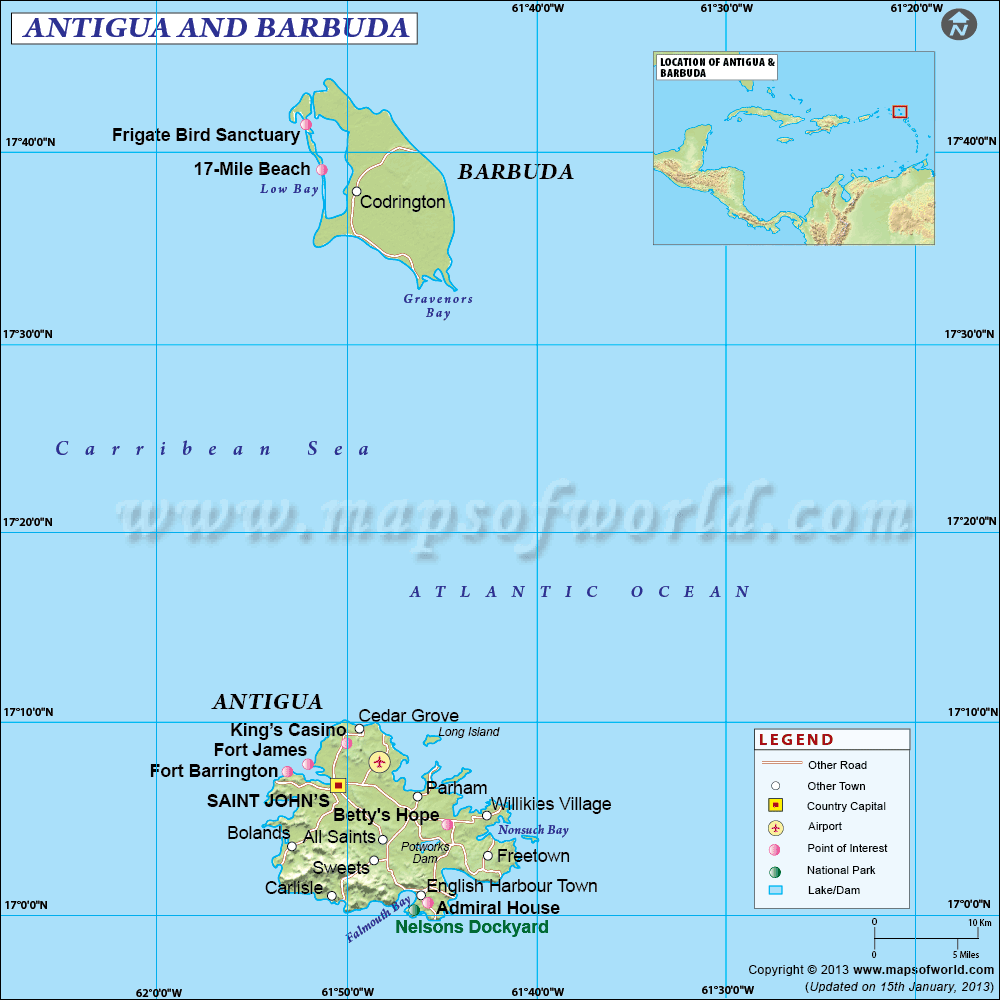
- Antigua and Barbuda Cities - Saint Johns, Seaton, Tyrell
- Neighboring Countries - St Kitts And Nevis, Dominica, St Lucia, St Vincent and the Grenadines, Barbados
- Continent And Regions - North America Map, Americas Map
- Other Antigua and Barbuda Maps - Where is Antigua, Antigua Blank Map, Antigua Political Map, Antigua Physical Map, Antigua Flag
Early societies on Antigua and Barbuda were of Native American origins, including an early civilization dating back to 2900 BC, and the Arawaks, who arrived from Venezuela around 1200 AD. The Arawaks had an agriculturally based society, whose crops included corn, chilies, tobacco, cotton, and sweet potatoes. However, the Arawak people were mostly driven out by the arrival of the aggressive Caribs.
The first Europeans to find the islands were the Spanish, with the voyage of Christopher Columbus in 1493, but the Caribs were able to repel any early attempts at colonization. However, the Spanish gave the islands their names, which mean “ancient” and “bearded.” When the British began colonizing in 1632, they began to work the cash crops, including sugarcane, with a major plantation in 1674. The British brought slaves from Africa to work on these plantations until they were finally emancipated in 1834. The islands remained a British colony until they were granted independence in 1981 as a Commonwealth nation. The country is still a constitutional monarchy, with Queen Elizabeth II as the head, and a local prime minister.
Neighboring Countries
The nearest countries to Antigua and Barbuda are other island nations, including St Kitts and Nevis, Dominica, the French territory of Guadeloupe and the British territories of Montserrat and Anguilla.
Major Cities
- St. John’s (capital)
- Codrington
- English Harbor
- Falmouth
- Half Moon Bay
Geography
Antigua and Barbuda is an island nation, located between the Caribbean Sea and Atlantic Ocean in the middle of the Leeward Islands and part of the Lesser Antilles. The country’s territory consists of the two major islands, Antigua and Barbuda, plus smaller islands, which Great Bird, Green, Guinea, Long, Maiden, and Redonda.
The islands are located just north of the equator, and has a temperate climate. The country’s terrain is dominated by low limestone, with hilly regions and the remnants of a volcano, which was renamed Mount Obama in 2009. The peak, which was previously called Boggy Peak, is the highest point in the country, standing 402 meters (1319 feet) above sea level on Antigua, and is part of the Shekerley Mountains. Barbuda’s terrain is low and flat, but features a highland plateau, and its highest point is just 42 meters (146 feet) above sea level. There are no significant rivers on the islands.
With its long coastlines, Antigua and Barbuda is said to have 365 beaches, which are sandy, with many natural lagoons, harbors, and coral reefs offshore.
Points of Interest
The top tourist attractions of Antigua and Barbuda are by far the islands’ beaches, with their soft white sands and clear waters. Antigua is the more popular destination for a beach vacation, with many options for luxurious resorts, while Barbuda is more remote for a quieter vacation off the beaten path, though the facilities are fewer and far between.
The main town in Antigua is the capital, St. John’s, where visitors will likely enter the country to find local cuisine, markets, nightlife, and outdoor recreation, including scuba diving and snorkeling. For a bit of history, the first British settlement is located at Falmouth, and is home to Monks Hill, a fort built by the British in the 1800s. Shirley Heights is a scenic lookout over English Harbor. On Barbuda, the main town is Codrington, which has a small population along with a frigate bird colony, and plenty of undisturbed beaches.
Transportation
The international airport in Antigua and Barbuda is V.C. Bird International, outside of the capital in St. John’s. The airport serves destinations across the Caribbean, as well as to the Americas and Europe. For flights into Barbuda, the main airport is Codrington Airport. The other option for entering Antigua and Barbuda is by boat, as the country is a popular stop for Caribbean cruises, as well as for people traveling via luxury yachts.
To get between the islands, there are ferries between Antigua and Barbuda. To get around the islands, there are cars for rent for fairly cheap, as well as a plethora of taxis and buses. Small boats can be hired for tours around the islands as well.
