 Buy Printed Map
 Buy Digital Map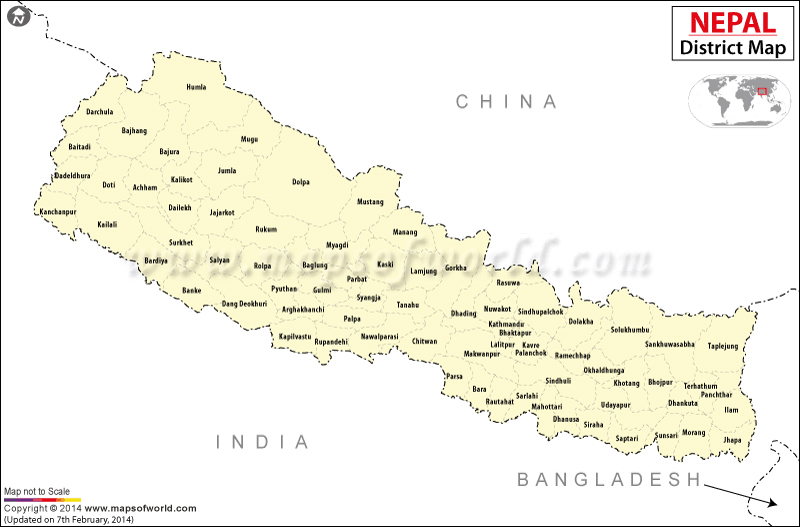
Nepal is a landlocked nation located in South Asia between India and the Tibet Autonomous Region of the People’s Republic of China. The capital of Nepal is Kathmandu, which is also the largest metropolitan area, with about 5 million inhabitants.
Nepal is divided into five development regions and fourteen zones. The development regions are Eastern Region (Purwanchal), Central Region (Madhyamanchal), Western Region (Pashchimanchal), Mid-Western Region (Madhya Pashchimanchal), and Far-Western Region (Sudur Pashchimanchal). The fourteen zones of Nepal are Bagmati, Bheri, Dhawalagiri, Gandaki, Janakpur, Karnali, Koshi, Lumbini, Mahakali, Mechi, Narayani, Rapti, Sagarmatha, and Seti.
Each of these zones is further divided into districts, of which there are a total of seventy-five, as shown on this Nepal District Map. Each district has a headquarters, and is governed by the chief district officer.
In terms of geography, Nepal is often classified into three main ecological zones: hills, mountains, and terai, or lowlands.
Nepal has a population of about 26 million, about 14 percent of which is located in urban areas. The majority of Nepal’s population lives in the central mountain area.
Locations in the Map
Humla, Dharchula, Bajhang, Baitadi, Dadelhura, Kanchanpur, Kailali, Doti, Bajhang, Bajura, Achham, Mugu, Jumia, Kalikot, Dailekh, Surkhet, Bardia, Jjarjakot, Salvan, Banke, Rukum, Dolpa, Rolpa, Dang, Kapilbastu, Rupandehi, Nawalparasi, Tanahu, Lamjung, Manang, Mustang, Myagdi, Baglung, Pyuthan, Argakhachi, Gulmi, Syanga, Parpat, Kski, Gorkha, Chitwan, Dhadin, Parsa, Bara Rautahat, Makwaripu, Patan, Ktm, B, Nuwkot, Sindupal Chok, Palan, Sindhuli, Sarlahi, Mahottari, Siraha, Okhaldhunga, Ramechhap, Dolkha, Solukhumbu, Sankhuwasabha, Bhojpur, Khotang, Udayapur, Saptari, Sunsari, Morang, Jhapa, Ilam, Terathum, Taplejum.
