7.5K
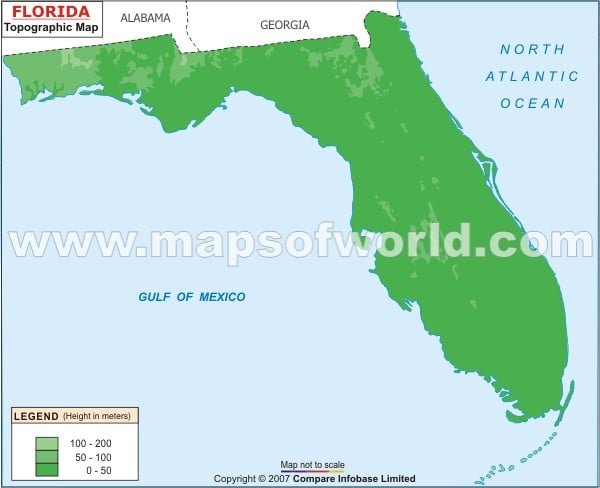
How to read Florida topography map
Spread out the map in a flat surface and bring out your compass. Look at the map closely and see the colors, which have been used. The scale references of the various colors used in the map are given in one corner, for you to read the map accurately. Look at the contour lines in the map, this will show elevation in the area. This Florida map can be a good guide for a hiking trip.
Topography of Florida
Florida is a plateau, which is located just above the sea level. Britton Hill at 345 feet is the highest elevation point while the lowest point in Florida is the Atlantic Ocean. Peninsula depicted by swampy zones; sandbars, islands and bays are some Topographic features of Florida.