South Africa Map
 Buy Printed Map
 Buy Digital Map
 Wall Maps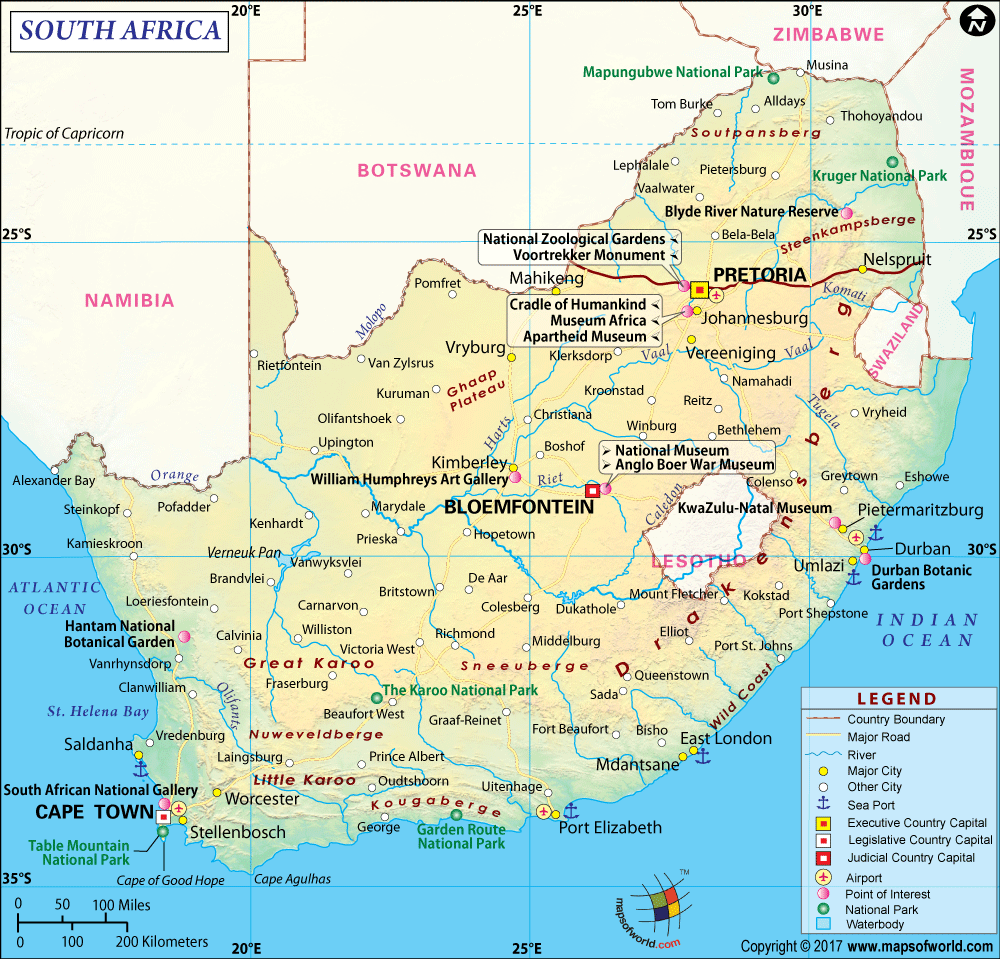
- South Africa Cities - Durban, Pretoria, Soweto, Cape Town
- South Africa Provinces - Eastern Cape, Free State, Gauteng, KwaZulu-Natal, Limpopo, Mpumalanga, North-West, Northern Cape, Western Cape
- Neighboring Countries - Lesotho, Mozambique, Botswana, Zimbabwe, Namibia
- Continent And Regions - Africa Map
- Other South Africa Maps - Where is South Africa, South Africa Blank Map, South Africa Road Map, South Africa River Map, South Africa Political Map, South Africa Physical Map, South Africa Flag
About South Africa
Explore this South Africa map to learn everything you want to know about this country. Learn about South Africa location on the world map, official symbol, flag, geography, climate, postal/area/zip codes, time zones, etc. Check out South Africa history, significant states, provinces/districts, & cities, most popular travel destinations and attractions, the capital city’s location, facts and trivia, and many more.
| Full name | Republic of South Africa. |
| Capital City | Pretoria (Administrative Capital), Cape Town (Legislative Capital), Bloemfontein (Judicial Capital). |
| Language | Zulu, Xhosa, Afrikaans, Dutch, English, Tswana, Southern Sotho, Swati and South Ndebele. |
| Currency | Rand. |
| Religion | Christian, Muslim, Hindu, Jewish and traditional religions. |
| National Anthem | “Nkosi Sikelel’ iAfrika” meaning ‘God Bless Africa’ and “Die Stem van Suid-Afrika” meaning ‘The Call of South Africa’. |
| Newspaper | Daily Sun, The Star, Sowetan, Die Burger, Beeld, The Citizen, Cape Argus, Isolezwe, Daily News, Cape Times, Business Day, The Herald, Volksblad, Pretoria News, Business Report and Diamond Fields Advertiser. |
| Places to Visit | Cape Town, Johannesburg, The Shipwreck Coast, Addo Elephant National Park, Blyde River Canyon Nature Reserve, Cango Caves, Central Kalahari Game Reserve, Kgalagadi Transfrontier Park and Kruger National Park. |
| Transport | Airways: the most important airport in the country is the Johannesburg International Airport. |
| Shopping | wire art like wire lampshades; bead crafts; Ndebele beadwork; textile weaving; embroidery; garments like skirts, robes and throws; “T-Bag Design” crafts; representation of African art forms in ceramics; ‘Porcupine’ art or the “Raku Art of Africa”; hand made toys; recycled paper jewelry; Gold Coins and Silver Coins, Krugerrands and gold coin pendants; glass wares like mosaic mirrors and leather goods from the skins of various animals. |
having a 3000 kilometer coast, South Africa is a country known for its Diamonds and National Parks. In fact, most of its history lies in its abundant availability of game and different types of diamonds. It brought the British and then the Dutch (called Boers) and led to rampant slavery. These resources also led to the Boer war that was fought between the British and the Boers. Finally, it bred the social phenomenon called ‘Apartheid’. After all the historical turbulence, the 1990s saw the abolishment of the Apartheid. The country has three capitals: Pretoria is the official seat of south Africa; Bloemfontein houses the judicial seat and Cape Town is home to the legislative seat of the country.
Where is South Africa
the country of South Africa is situated in the southern extreme of the African continent. The country is so located that it is bordered by water bodies on three sides.the country of South Africa is situated in the southern extreme of the African continent. The country is so located that it is bordered by water bodies on three sides. The other unique feature about the country is that the country of Lesotho lies completely engulfed in the eastern side. The immediate political neighbors of South Africa are eSwatini (Swaziland) and Mozambique to the northeast and Zimbabwe, Botswana and Namibia to the north. Lying in the southern hemisphere, its eastern, western and southern borders are lined by the Indian Ocean and the Atlantic Ocean.
Physical Map of South Africa
three major types of land forms dominate the country of South Africa. They are the coastal regions, plateaus and mountain ranges. Each of these three types of landscape is and important feature of South Africa. The plateaus occur in the interior regions of the country, while the hills and mountain ranges are dry and rugged. The most important of these plateaus is the Karoo plateau which further ascends to form mountains. Then there is the Kalahari Desert to the northwest of the country. While the plateaus and hills are craggy, the coastal regions are plain and very tropical. The coldest region in the country is the Sutherland which lies to the west of the Roggeveld Mountains. The other high range is the Drakensberg Mountains which provides for an ideal skiing paradise. The country’s two chief rivers are the Limpopo, and the Orange.
Climate of South Africa
most of the country of South Africa boasts of a semiarid clime. However, the coastal regions in the east experiences subtropical conditions. The country, which would otherwise have been hot, is tempered by the ocean currents that come in from three sides of the country. Otherwise, South Africa is primarily sunny and warm. In fact, the plateau in the interiors of South Africa go a long way to contributing to the country’s warm climate. Being relatively dry, South Africa receives most of its rainfall in the summer months which occur between September and April. The winters fall between May and August.
Flora and Fauna of South Africa
given that the South Africa Geography is semiarid and subtropical, the plant life that abounds falls under the hard-leaved and evergreen variety. There are also several flowering varieties that are to be found in the region; of them the proteas are the most common variety. However, South Africa is devoid of forest land. The only forest region in the country lies near the coastal regions and the midlands. Eucalyptuses and pines are some of the imported varieties. Rare species of trees like ironwoods, yellowwoods and stinkwoods fall under the protection of ‘nature protection’. However, when you come to the fauna in the country, you are sure to be swamped with names and choices. Some of the animal species are africanis, quagga, elephant, lion, rhino, leopard and buffalo, giraffe, hippo, white rhino, cheetah, wildebeest, zebra, nocturnal bushbabies, vervet, samango monkeys, chacma baboons, Dassies, meerkats, aardvark, aardwolf, clawless otter, spotted-necked otter, hyaena, jackal, bat-eared fox, African wild cat, black-footed cat, civet, genet, mongoose, various antelopes like the duiker, sable antelope and kudu. There are a lot of reptiles in South Africa too; among them are crocodiles, loggerhead turtles, leatherback turtles, tortoises, chameleons and over 100 species of snakes and vipers like the python, puffadder, green mamba, black mamba, boomslang and rinkhals. Avian fauna consists of many migratory varieties along with non-migratory ones. Some of the birds you can see in the country are the cuckoos, kingfishers, ostriches, hornbills, Little Brown Jobs or LBJs, grey louries, mousebirds, hoopoes, hadeda ibises, crested barbets, black-collared barbets, Cape whiteyes, olive thrushes, Burchell’s coucal, blue cranes, eagles, vultures, bee-eaters, sunbirds, lilac-breasted roller, knysna and purple-crested louries. Marine fauna mostly comprises of migratory varieties like the blue whale, killer whale, southern right whale and white shark; aside of the regular species like rock lobster, abalone, sardines and pilchards.
Keep surfing Mapsofworld for all the information you need about the Republic of South Africa and any other place in the world.