4.1K
- Antigua and Barbuda Cities - Saint Johns, Seaton, Tyrell
- Neighboring Countries - St Kitts And Nevis, Dominica, St Lucia, St Vincent and the Grenadines, Barbados
- Continent And Regions - North America Map, Americas Map
- Other Antigua and Barbuda Maps - Antigua Map, Where is Antigua, Antigua Blank Map, Antigua Political Map, Antigua Physical Map
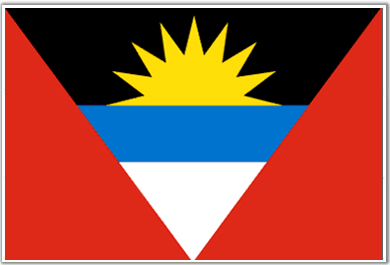
Designed by Sir Reginald Samuel, a high school art teacher in Antigua and Barbuda, the national flag of Antigua and Barbuda was adopted on February 27, 1967.
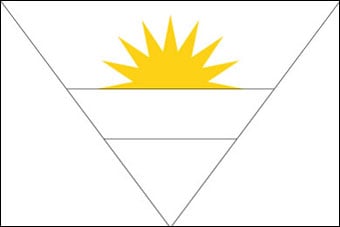
The Antigua and Barbuda show an inverted isosceles triangle on the top edge. There are three horizontal bands of different colors: white, blue, and black. At the bottom of the black area is a 16-pointed yellow star/sun symbol. The sun in the flag represents the dawning of a new era.
The colors in the flag have different meanings. The red color represents the energy of the people, blue symbolizes hope and black represents African ancestry. The V shape stands for victory.
| Official Name: | Antigua and Barbuda |
| Proportion: | 2:3 |
| Adopted on: | February 27, 1967 |
| Designed by: | Reginald Samuels |
| Location of Antigua and barbuda: | Between the Caribbean Sea and the Atlantic Ocean |
| Capital City of Antigua and Barbuda: | St. John |
| Major Cities of Antigua and Barbuda: | English Harbour, Codrington, and others |
| Area: | 170 square miles |
| Population: | 99,660 |
| Currency: | East Caribbean dollar (XCD) |
| Official Language: | English |
| National Anthem: | Fair Antigua, We Salute Thee |
| National symbol(s): | Fallow deer |
| National colors: | red, white, blue, black, yellow |
| National anthem: | |
| Name: | “Fair Antigua, We Salute Thee” |
| Lyrics/music: | Novelle Hamilton RICHARDS/Walter Garnet Picart CHAMBERS |
previous post