 Buy Printed Map
 Buy Digital Map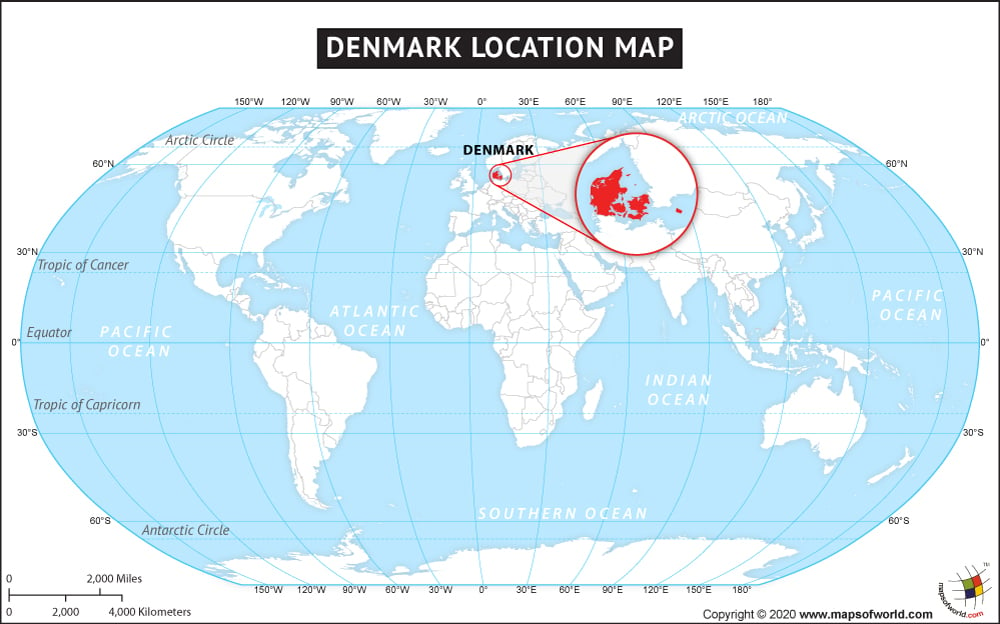
35.8K
- Denmark Cities - Aalborg, Copenhagen, Odense
- Neighboring Countries - Germany, Poland, Norway, Sweden
- Continent And Regions - Europe Map
- Other Denmark Maps - Denmark Map, Denmark Blank Map, Denmark Road Map, Denmark River Map, Denmark Political Map, Denmark Physical Map, Denmark Flag, Denmark Time Zone
The country of Denmark is in the Europe continent and the latitude and longitude for the country are 55.7200° N, 12.5700° E.
The neighboring countries of Denmark are :
Germany, Sweden, Norway, United Kingdom
Maritime Boundaries
- Norway
- Poland
- Sweden
- United Kingdom
Facts About Denmark |
|---|
| Country Name | Denmark |
|---|---|
| Continent | Europe |
| Capital and largest city | Copenhagen |
| Area | 42,915.7 km2 (16,562.1) sq mi |
| Population | 5,668,743 (April 2015 estimate) |
| Lat Long | 56° 0′ 0″ N, 10° 0′ 0″ E |
| Official Language | Danish |
| Calling Code | +45 |
| Time Zone | CET (UTC+1) Summer (DST) CEST (UTC+2) |
| Airport | 32 Airports, Schedule – 11 |
| Neighbour countries | Germany, Sweden, Norway, United Kingdom |
| Internet TLD | .dk |
| Currency | Danish krone |
previous post