4.5K
- Bahrain Cities - Manama
- Neighboring Countries - Qatar, United Arab Emirates, Saudi Arabia, Kuwait, Iran
- Continent And Regions - Asia Map
- Other Bahrain Maps - Bahrain Map, Where is Bahrain, Bahrain Blank Map, Bahrain Road Map, Bahrain Political Map

Download Picture of Blank Bahrain Flag For Kids to Color
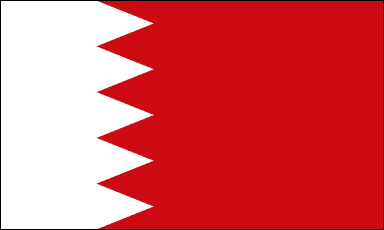
The national flag of Bahrain comprises a white band on the left and a red band on the right separated by a zigzag made of five white triangles pointing
to the right side of the flag. These five triangles are also believed to represent the five pillars of Islam.
The color red is supposed to represent the Kharijite sect of Islam.
The Bahranian flag bears close resemblances to the flag of Qatar.
| Official Name: | Kingdom of Bahrain |
| Proportion: | 3:5 |
| Adopted on: | February 14, 2002 |
| Location: | Middle East on the western shores of the Persian Gulf |
| Capital City: | Manama |
| Major Cities: | Al Muharraq, Riffa, Hamad Town, Al-Malikiyah |
| Area: | 290 square miles |
| Population: | 1,234,571 |
| Language: | Arabic |
| Currency: | Bahraini dinar (BHD) |
| National Anthem: | Bahrainona |
| National symbol(s): | a red field surmounted by a white serrated band with five white points |
| National colors: | red, white |
| National anthem: | |
| Name: | “Bahrainona” (Our Bahrain) |
| Lyrics/Music: | unknown |
Facts about Bahrain flag |
| Country | Bahrain |
|---|---|
| Designed by | NA |
| Adopted | 14. February 2002 |
| Revision | 1820, 1932, 1972, 2002 |
| Design and Colors | A white band on the left, separated from a red area on the right by five triangles that serve as a serrated line |
| Size Ratio | 3:5 |
previous post