2.3K
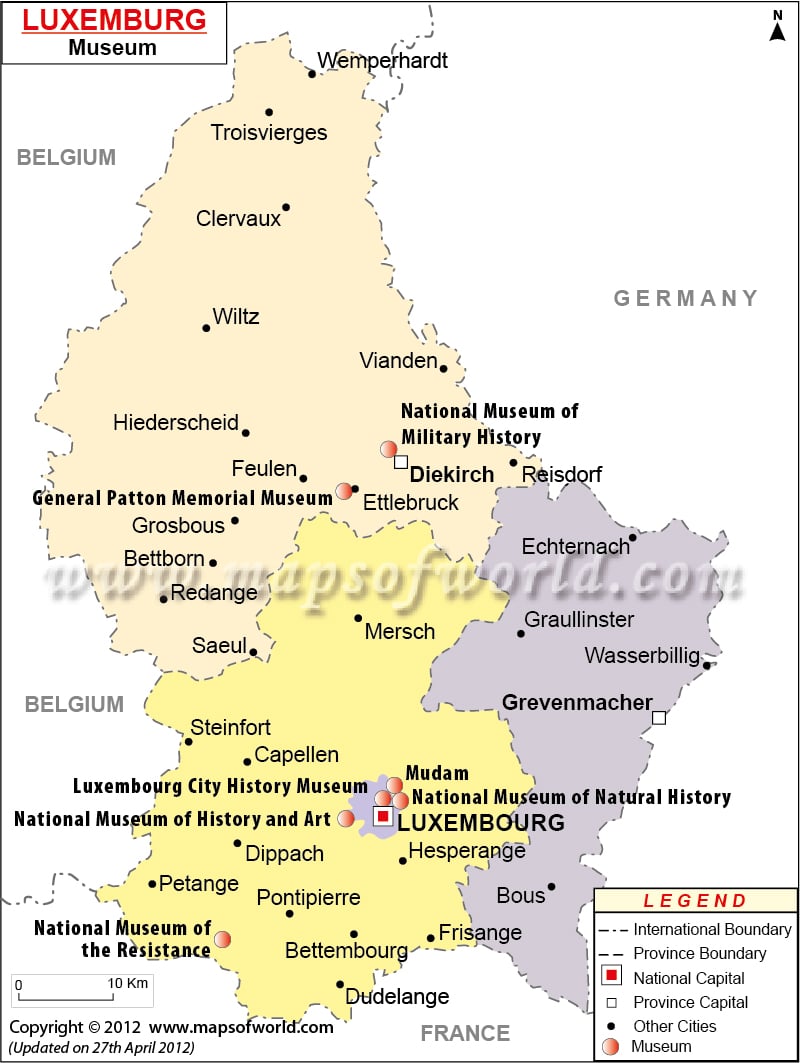
There are a large number of museums in Luxembourg. These museums of Luxembourg are the centers of the art, culture and history of Luxembourg. The artifacts of the museums carry with them the tale of the bygone era. Some of the very famous museums of the city are given below:
- National Museum of Art and History
- Museum of Modern Art Grand-Duc Jean
- National Museum of Natural History
- Deportation Memorial
- Bank Museum
A Brief on the Museums in Luxembourg
- National Museum of Art and History: Located in fish market, this Luxembourg museum has got a huge collection of art, archaeological findings, coins, medals, weapons and other documents.
- Museum of Modern Art Grand-Duc Jean: Located in Avenue Guillaume, this museum has got a huge collection of the historical facts about Luxembourg.
- National Museum of Natural History: Located in Grund, Luxembourg, this museum has got a multimedia system giving ample knowledge on natural science. The various rooms of the museum emphasizes on human being and its evolution along with world history, natural landscapes, plant and animal species and ecology.
- Deportation Memorial: This memorial basically pays reverence to the victims of Nazism.
- Bank Museum: It provides instruction as well as entertainment on the age-old banking tradition of Luxembourg.
previous post