- Turkey Syria Earthquake 2023 - Syria Map, Turkey Map, Syria Turkey Map, Syria Lat Long, Turkey Lat Long, Syria Political Map, Turkey Political Map, Idlib Map, Gaziantep Map, Turkey 2011 Earthquake, Fault Line Map
Death toll in Syria rises to 3,500, UN officials say
09.11.2011
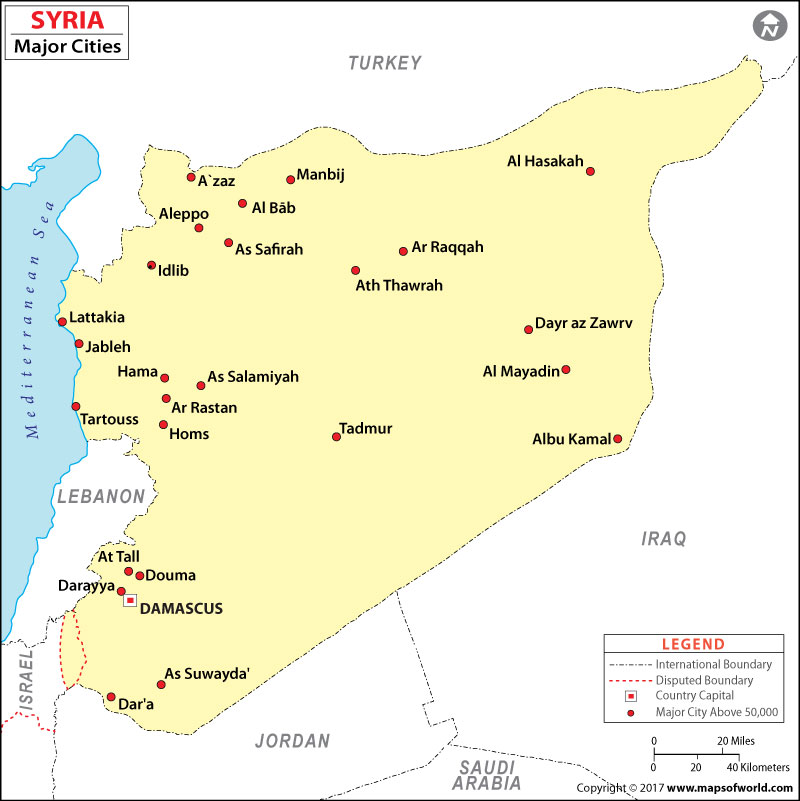
The situation in Syria has worsened since a few days, as anti-government protests continue in the country. The government has come to using heavy artillery against the civilians. The residential areas in the city of Homs are being continually attacked by the Syrian troops,” said Ravina Shamdasani, spokeswoman for the Office of the UN High Commissioner for Human Rights. The UN reports that more than 3,500 people have died in the ongoing anti-government protests.
In addition, at least 1,100 members of the security forces have also been killed in the violent clashes between the army and the security forces.
The main fight now is over the contested Baba Amr district. Many residents have left their homes to escape arrests by the troops. Syria has been in a state of chaos since March this year. Protests against President Bashar al-Assad’s government have continued across the country since then.
Syria roundup: This past week
11.5.2011
In more strict measures being taken against the protestors, the government has started sniping random people in the streets.
- In the city of Daraa, electricity and water have been discontinued.
- The government forces are also seizing any food materials they can find.
- The army is opening unrelenting fire on the citizens in the cities of Baniyas, Hama, and Homs.
According to the latest reports, the government has claimed to have the upper hand. One wonders if such statements make any sense at all.
Background :
Like some other countries of the Middle East region, Syria was under Emergency Law since 1962.
Because of this, there was very little constitutional protection for the citizens. Hafez al-Assad ruled the country from 1970 for the next thirty years, and then his son Bashar al-Assad followed. There was an incident of serious anti-government riots in 2004, which might have laid the foundation for the 2011 protests.
Timeline :
Late January : A person from Al-Hasakah set himself on fire in protest against the government. Also, two soldiers were killed during a demonstration violence.
Do you think Syria will get to taste democracy?
February : This period was termed as “days of rage” as the protests spread through social media and people took to the streets in large numbers. A number of arrests were conducted by the security police. More or less, this was not a very violent month for Syria.
March : The Syrian political prisoners went on a hunger strike to protest against the suppression by the government. By now, the demonstrations spread to many cities: al-Hasakah, Daraa, Deir ez-Zor, and Hama. On 18 March, the protests became very severe and the regime used force to crush the opposition. Numerous deaths were reported in may incidents of clashes.
Criticism : The international community is severely critical of the methods Syrian government adopted to counter the protests. By late March, around 25 people had died in these incidents.
3.5.2011
Want to see a government butcher its own people? Go to Syria these days.It’s gone from bad to worse for the protestors, who are being targeted by the armed forces. The Syrian government has warned the people to surrender or face the consequences. In the past few days, heavy artillery has been used against the civilians, and government forces have sent tanks rolling into cities. After numerous mass-arrests and deaths, the toll now stands at an estimated 1,000.There is much international criticism, however, and the UN is considering to impose sanctions on the country. But for now, all these threats are falling on the deaf ears of Bashar al-Assad.Good Friday turns macabre, military shells homes
26.4.2011
Damascus: Tuesday 7:51 am
PST: Monday 8:51 pm
GMT: Tuesday 4:51 amIn one of the most brutal and heartless acts of violence by a government, the Syrian tanks stormed the city of Daraa and opened heavy fire at random. Many people died in this, estimated at 30. Earlier also, the government had attacked the protestors on Good Friday, an act of violence that was condemned in Syria and outside. Reports said that the military are forcing their way into people’s homes and launching an offensive.So far, close to 600 people have died in these protests, the casualties having risen sharply in the past few days. The Security Council has too spoken out against the attacks, but for now the Syrian government carries on unchallenged.
Protestors seize Homs, Government not happy
19.4.2011: Damascus, Tuesday 9:00 am (PST: Monday 10:00 pm – GMT: Tuesday 6:00 am)
The protestors have taken over the city of Homs, third largest in the country, demanding that the government step down. In the recent violence, 8 people were killed in the conflict. About 20,000 people are out at the Al-Saa Square, which is proving to be a difficult problem for the government.
In response, the government was not at all pleased with the demonstrations. It said that what the people are up to is going to be considered an “armed insurrection” and will not be tolerated.
Iran meddling in Syrian affairs : US
15.4.2011: Damascus, Friday 8:02 am (PST: Thursday 9:02 pm – GMT: Friday 5:02 am)
In a statement released yesterday, the US State Department has said that it has solid evidence that Iran is supporting the ongoing crackdown in Syria. It alleged that Iran is supplying anti-protest gear to Syria, as well as helping the government block and monitor internet access. Now this comes as a bit of surprise for everyone; so far, Iran has vocally supported the protests in the Arab world, and had vociferously condemned the Bahraini government for use of force against civilians.
Given that almost three-quarter of the Syrian population is Sunni, perhaps this is not so much a shock, after all.
Crackdown intensifies, so do the protests and criticism
13.4.2011: Damascus, Wednesday 1:38 pm (PST: Wednesday 2:38 am – GMT: Wednesday 10:38 am)
A large number of women and children were out in Syria blocking the main coastal highway, to protest against the large-scale asserts made under the ongoing crackdown. Dozens of people were recently arrested as part of the crackdown on the protestors. The demonstrations have been intensifying for the last three weeks, with the people demanding fundamental reforms.
The international community is also unhappy with Syria: EU is about the review their Syria policy, while the White House has openly condemned the Syrian government.
And now, Syria down to strong-arm tactics
11.4.2011: Damascus, 8:11 am (PST: Sunday 9:11 pm – GMT: Monday 5:11 am)
In a first, the Syrian government came down on the protesting civilians with the use of military might. President Bashar al-Assad has sealed off the port city of Baniyas, and tanks are being used to break up the violent protests. Earlier, four people were killed in an offensive by the government forces. As of now, news organizations are not allowed in the country, and it is hard to get reliable information. There are dire hints that the government may be speedily at work to draft and enforce an anti-terrorism law to unleash unforeseen havoc on the protestors.
Protestors to step on the gas :
8.4.2011: Damascus, Friday 8:43 am (PST: Thursday 7:43 pm – GMT: Friday 3:43 am)
The protestors are planning to stage large-scale demonstrations in the city of Douma today. This move comes after the response to earlier protest calls was encouraging. The fuel for this further unrest comes from the last week’s killings by the security forces. The police are expected to be present in plainclothes, and it is feared that this might spiral into another disturbing incident.
Finally, end of emergency laws in sight :
5.4.2011: Damascus, Monday 7:19 am (PST: Monday 8:19 pm – GMT: Tuesday 4:19 am)
The Syrian government has said that it will finish formulating a new legislation to end the emergency laws by this Friday. The president has set a deadline of 25 April for the review of emergency to be completed. This is great news for the people of Syria, who have been niggling under pressure since 1963.
150 dead . . . What next?
4.4.2011: Damascus, Monday 10:10 am (PST: Sunday 10:10 pm – GMT: Monday 6:10 am)
The situation in Syria remains unclear. The streets are boiling with rage and agitation directed at the government, and almost 150 people have died by now. True, the president Bashar al-Assad has invited has appointed Adel Safar the new prime minister and asked him to form the government, but this is being seen more as a ploy to retain an indirect control on power. In any case, the president has not inspired much confidence by regularly going back on his promises of reforms.
Latest: Syrian government resigns :
30.3.2011: Damascus, Wednesday 06:15 (PST, Tuesday 20:15 – GMT, Wednesday 04:15)
In an important development, the Syrian government resigned on Tuesday amidst severe protests gripping the entire country. The president has accepted the government’s resignation and a new one is to be announced soon. This follows the earlier incident of clashes between the protestors and government supporters where about 37 people were killed.
Latest: Reuters journalists finally released :
29.3.2011: Damascus, Tuesday 2:24 (PST, Tuesday 02:24 – GMT, Tuesday 10:24)
The two television journalists of Reuters who were detained in Syria while covering the unrest were finally released. According to the Syrian officials, these journalists did not have the required permits to work in the country. Both these journalists are Lebanese and have returned to their bases safely.
As part of the protests that spanned the Arab and north African countries in 2011, the Syrian civil unrest had its beginnings in late January when the people of Syria began protesting against the ruler Hafez al-Assad ad his son.
The United Nations has voiced its concern for the people of Syria hurt in the crackdown, calling it “unacceptable”.